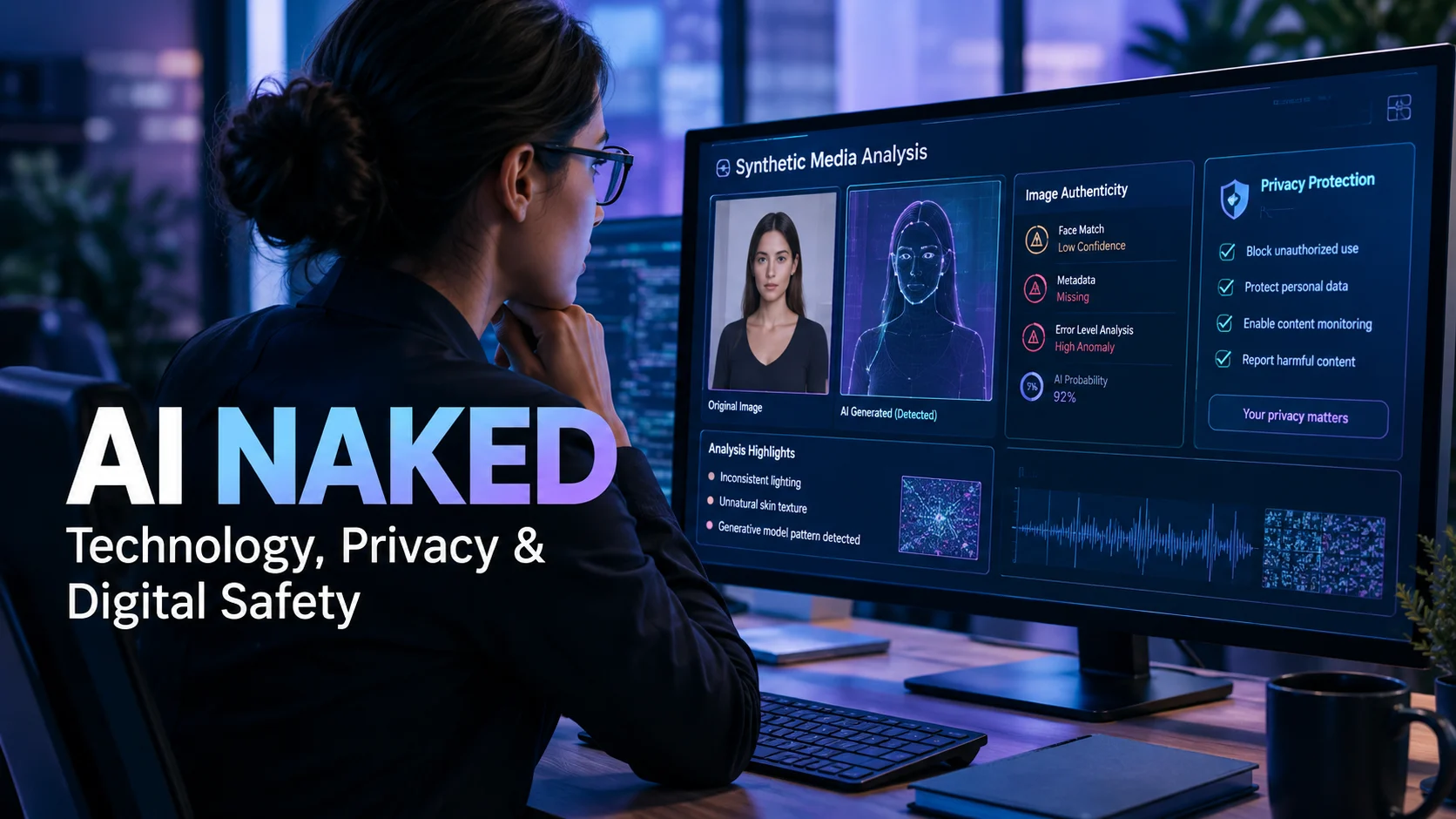
“AI naked” commonly refers to artificial intelligence tools that generate nude-looking images or alter photographs to simulate nudity, often through image-generation or deepfake technology. These tools raise important concerns about consent, privacy, image misuse, and legal responsibility, particularly when they depict real people without permission.
At a Glance
- Meaning: AI naked usually describes AI-generated nude imagery, simulated undressing, or related synthetic-image searches.
- Technology: Image-generation models, image editing, and deepfake techniques can create or manipulate visual content.
- Consent matters: Using someone’s photograph to create a sexualized image without permission can cause serious harm.
- Privacy risks: Uploaded photographs may be stored, processed, or exposed, depending on the service.
- Legal considerations: Laws vary by country, and some jurisdictions specifically address non-consensual synthetic intimate imagery.
- Safer approach: Choose legitimate image-editing tools, respect consent, review privacy policies, and report abusive content.
What Does AI Naked Mean?
The phrase AI naked is an ambiguous search term. It can refer to AI-generated nude imagery, artificial intelligence that simulates removing clothing from photographs, or discussions about the technology behind synthetic intimate images.
People may also use the phrase when looking for information about deepfake pornography, image manipulation, AI-generated adult artwork, or the safety of online image-editing services.
Understanding the intended meaning is important because these activities are not identical. Creating an artistic image of a fictional adult character is different from manipulating a real person’s photograph to depict nudity without consent.
Why Is AI Naked a Popular Search Term?
Generative AI has made image creation and editing more accessible. Modern image models can generate realistic people, modify existing photographs, and produce synthetic scenes from written instructions.
This accessibility has also increased concern about tools designed to create fake intimate images. Meta discussed enforcement against so-called nudify apps in a June 2025 announcement, describing measures against their promotion and distribution on its platforms.
The central issue is not simply whether AI can generate an image. It is whether the image misrepresents someone, violates their consent, exposes personal information, or causes harm.
How Does AI Naked Image Technology Work?
AI image technology can create visual content from text prompts, existing pictures, or a combination of both. Different systems use different techniques, so there is no single method behind every AI-generated nude image.
1. Generative Image Models
Generative image models learn patterns from training data and use those patterns to produce new images. Depending on the model, users may describe a fictional scene, specify artistic characteristics, or request changes to an existing image.
The output is generated content, not necessarily a photograph of a real event. However, realistic results can make synthetic images difficult to distinguish from genuine photographs.
2. Image-to-Image Editing
Image-to-image systems use an existing picture as a starting point. They can modify backgrounds, lighting, clothing, colors, or other visual elements.
The same general editing capabilities can be misused to create fabricated intimate imagery. A convincing result does not make the depicted event real or establish that the person consented.
3. Deepfakes and Synthetic Media
A deepfake is media generated or manipulated with AI to imitate a person or create a misleading representation. Deepfakes can involve faces, voices, videos, or other visual characteristics.
In the context of AI naked searches, the term often refers to fabricated nude images that use a real person’s appearance. Such images can be harmful even when the person was never photographed nude.
4. Why Results Can Be Inaccurate
AI-generated images may contain visual inconsistencies, unnatural details, distorted anatomy, or mismatched lighting. Some results appear convincing at first but fail under closer inspection.
These imperfections are not a reliable detection method. A realistic image can still be fabricated, and an unusual-looking image is not automatically proof of manipulation.
Common Uses and Important Distinctions
Not every AI image tool serves the same purpose. The intended use, the subject’s identity, and the person’s consent all matter.
| Category | Typical purpose | Main consideration |
|---|---|---|
| AI art generation | Creating fictional characters and artistic scenes | Follow the platform’s content rules |
| Digital fashion editing | Exploring outfits, styling, and visual concepts | Obtain permission when editing identifiable people |
| Medical and educational imagery | Illustrating anatomy or explaining health concepts | Prioritize accuracy and appropriate safeguards |
| Synthetic intimate imagery | Creating simulated nude or sexual images | Consent, age restrictions, and applicable law |
| Non-consensual nudification | Fabricating nude images of someone without permission | Serious privacy and image-abuse concerns |
The distinction between consensual creation and non-consensual manipulation is particularly important. A photograph being publicly available does not grant unrestricted permission to turn it into sexualized content.
Benefits and Legitimate Applications of AI Image Generation
AI image generation can support creative and professional work when used responsibly. Its benefits extend well beyond intimate imagery.
Creative experimentation
Artists can explore fictional characters, visual styles, lighting arrangements, and compositions without arranging a physical photoshoot for every concept.
Fashion and design
Appropriate virtual try-on tools can help people explore clothing combinations and visualize different styles. Their accuracy depends on the tool, image quality, and the garments being represented.
Education and visualization
Professionally designed anatomical illustrations can support educational materials, provided they are accurate, appropriately labeled, and suitable for their audience.
Faster visual production
Designers and content creators can generate initial concepts before investing time in detailed illustrations or photography. Human review remains important for accuracy, consent, and quality control.
These benefits do not require manipulating real people’s photographs into nude images. Safer alternatives can meet many creative goals without exposing individuals to unwanted sexualization.
Risks of AI Naked Tools
The biggest concerns arise when a service encourages users to upload photographs of identifiable people and produce intimate images without their permission.
Non-consensual intimate imagery
Fabricated intimate images can be used for harassment, humiliation, coercion, bullying, or reputational damage. Victims may experience serious emotional and social consequences even when the images are entirely synthetic.
Consent to take or share an ordinary photograph is not consent to create a sexualized version of it.
Privacy and data exposure
An image uploaded to an online service may pass through external servers or third-party providers. Depending on the service, information may be retained, reviewed, or processed under its stated policies.
Before uploading personal photographs, check whether the service explains:
- What happens to uploaded images.
- How long files and associated data are retained.
- Whether images may be used to improve models.
- Whether third-party processors receive the data.
- How deletion requests work.
- Whether the service offers account security and access controls.
Do not assume that a website is private simply because it advertises anonymous use or immediate results.
Scams and misleading claims
Some websites may advertise free processing but introduce payment requirements, subscriptions, credit limits, or restrictions later. Others may use deceptive download buttons or request unnecessary permissions.
Avoid services that demand unrelated personal information, make unclear billing promises, or pressure users to upload sensitive photographs.
Harm involving minors
Sexualized synthetic images involving minors raise especially serious safety and legal concerns. Do not create, request, share, or distribute sexual imagery depicting anyone under 18, whether the image is real or AI-generated.
If such material appears online, report it through the relevant platform and appropriate child-protection channels. Do not redistribute it as evidence.
Privacy and Security: What Should Users Check?
Privacy claims deserve careful examination, especially when an image contains someone’s face or other identifying details.
Read the actual privacy policy
Look for explicit information about retention, deletion, training use, third-party sharing, and account closure. A vague promise that files are handled securely does not answer these questions.
If the provider does not explain its data practices, consider using a different service for ordinary, non-sensitive image editing.
Understand local processing versus cloud processing
A tool that processes images locally may reduce the need to transmit photographs to a remote server. A cloud-based service generally sends some data to its infrastructure for processing.
However, local processing alone does not guarantee complete privacy. The app may still collect telemetry or synchronize files through other services.
Do not confuse security certifications with privacy guarantees
A security certification or independent audit can provide useful evidence about specific controls and organizational practices. It does not automatically guarantee that a provider never retains uploaded images or uses them for model training.
Evaluate the actual scope of the provider’s commitments rather than relying on a badge or marketing statement.
Legal and Ethical Considerations
The legality of AI-generated intimate imagery depends on the jurisdiction, the conduct involved, the age of the people depicted, and the circumstances.
Some laws address the creation, distribution, or threatened distribution of non-consensual intimate images, including synthetic depictions. Other laws may apply to harassment, extortion, privacy violations, or sexual imagery involving minors.
For example, the United States enacted the TAKE IT DOWN Act in 2025. The law addresses the publication of non-consensual intimate visual depictions, including digital forgeries, and establishes removal obligations for covered platforms.
In the United Kingdom, government measures announced in 2026 also address intimate image abuse and tools used to generate non-consensual intimate images. The precise legal position depends on the applicable provisions and their commencement.
These examples do not establish the law everywhere. Users in Pakistan and other countries should consult current local legislation or qualified legal counsel when a specific incident raises legal concerns.
Why Consent Is Essential
Ethical image creation requires more than technical capability. The person depicted should understand and agree to the intended use of their likeness, especially when the content is intimate or sexualized.
Consent should be informed, voluntary, and specific. Permission to edit a photograph for a professional profile, for example, does not imply permission to create a nude version.
What to Do if Someone Creates or Shares an AI Nude Image of You
Discovering a fabricated intimate image can be distressing. Taking measured steps may help preserve evidence and reduce further circulation.
- Save evidence safely. Record relevant URLs, account names, timestamps, and screenshots of posts or threats where lawful and safe to do so.
- Report the content. Use the platform’s reporting process for non-consensual intimate imagery, impersonation, harassment, or synthetic sexual content.
- Avoid engaging with extortionists. Do not send money or additional intimate material in response to threats. Consider contacting local authorities or a qualified support organization.
- Use a specialist removal resource. Adults depicted in non-consensual intimate images may be eligible for StopNCII.org.
- Seek appropriate support. Trusted people, legal professionals, victim-support services, and relevant authorities may help with the next steps.
How StopNCII.org Can Help
StopNCII.org is a free resource for eligible adults concerned about the distribution of non-consensual intimate images. It creates a digital fingerprint, known as a hash, on the person’s device and shares that fingerprint with participating platforms.
The original image stays on the device during this process. Participating services can use the hash to identify matching content under their policies.
The service has important limits. It does not remove content from the entire internet, and its protection applies to participating platforms. Eligibility requirements also apply.
If the person depicted was under 18 when the image was created, use an appropriate child-protection resource, such as the National Center for Missing & Exploited Children’s Take It Down service where applicable.
How to Evaluate an AI Image Tool Responsibly
If your goal is legitimate image creation or editing, assess the provider before uploading a photograph.
| Evaluation factor | What to look for | Why it matters |
|---|---|---|
| Content policy | Clear restrictions on abuse and non-consensual imagery | Shows how the service addresses misuse |
| Privacy policy | Specific retention and deletion terms | Helps you understand how images are handled |
| Consent safeguards | Restrictions or checks for sensitive edits | Can reduce opportunities for misuse |
| Pricing | Clear subscription, credit, and renewal terms | Helps avoid unexpected charges |
| Technical requirements | Supported formats, limits, and processing requirements | Helps determine whether the tool suits your workflow |
| Support and reporting | Accessible abuse-reporting and complaint channels | Provides a route for addressing harmful content |
Do not rely on a tool’s promotional claims alone. Review its published terms and test ordinary, non-sensitive editing features before committing to a subscription.
Are There Safer Alternatives?
For fashion concepts, use legitimate virtual try-on software. For creative projects, use image generators that support fictional adult characters and comply with their content policies. For medical education, choose established educational illustration resources.
For people researching AI platforms rather than looking for a specific image editor, directories such as Futurepedia and There’s An AI For That can help identify general-purpose AI products. Listings are discovery resources, not proof that a particular service permits a given use or handles sensitive data responsibly.
The right choice depends on the task. A general image editor may be sufficient for background removal, retouching, or clothing visualization without the privacy and consent risks associated with nudification services.
Frequently Asked Questions
1. What does AI naked mean?
AI naked generally refers to AI-generated nude imagery or technology that simulates nudity in images. The phrase can also describe discussions about synthetic intimate images, deepfakes, and the privacy or consent issues associated with these technologies.
2. Can AI create fake nude images of real people?
Yes. Some image-generation and manipulation systems can create fabricated intimate images that resemble real people. These images may be entirely synthetic, but they can still cause harm when created or distributed without consent.
3. Are AI naked apps legal?
Their legality depends on the country, the tool’s intended use, the depicted person’s age, and the conduct involved. Creating or distributing non-consensual intimate imagery may violate applicable laws, even when AI generated the image.
4. Can I remove an AI-generated nude image of myself?
You can report the image to the hosting platform and request removal under its applicable policies. Eligible adults can also use StopNCII.org to help participating platforms detect matching images. Neither method guarantees removal from every website.
5. Are AI image generators safe for private photographs?
Not automatically. Safety depends on how a service processes, stores, shares, and deletes uploaded images. Review its privacy policy, retention terms, and security practices before submitting photographs that reveal your identity or other sensitive information.
Conclusion
AI naked is a broad search term associated with synthetic nude imagery, image manipulation, and deepfake technology. Understanding how these systems work is useful, but consent, privacy, and responsible use deserve equal attention.
For legitimate creative projects, choose transparent image-editing services with clear policies and appropriate safeguards. If someone uses AI to create or distribute an intimate image of you without permission, document the incident safely, report it, and seek support through relevant removal and victim-assistance resources.

Oliver Wilson is an AI researcher and tech writer living at the intersection of human creativity and machine intelligence. At AixOrbit.com, he decodes complex neural networks, generative AI and emerging tech trends into actionable insights making sure humans stay one step ahead of the algorithms.