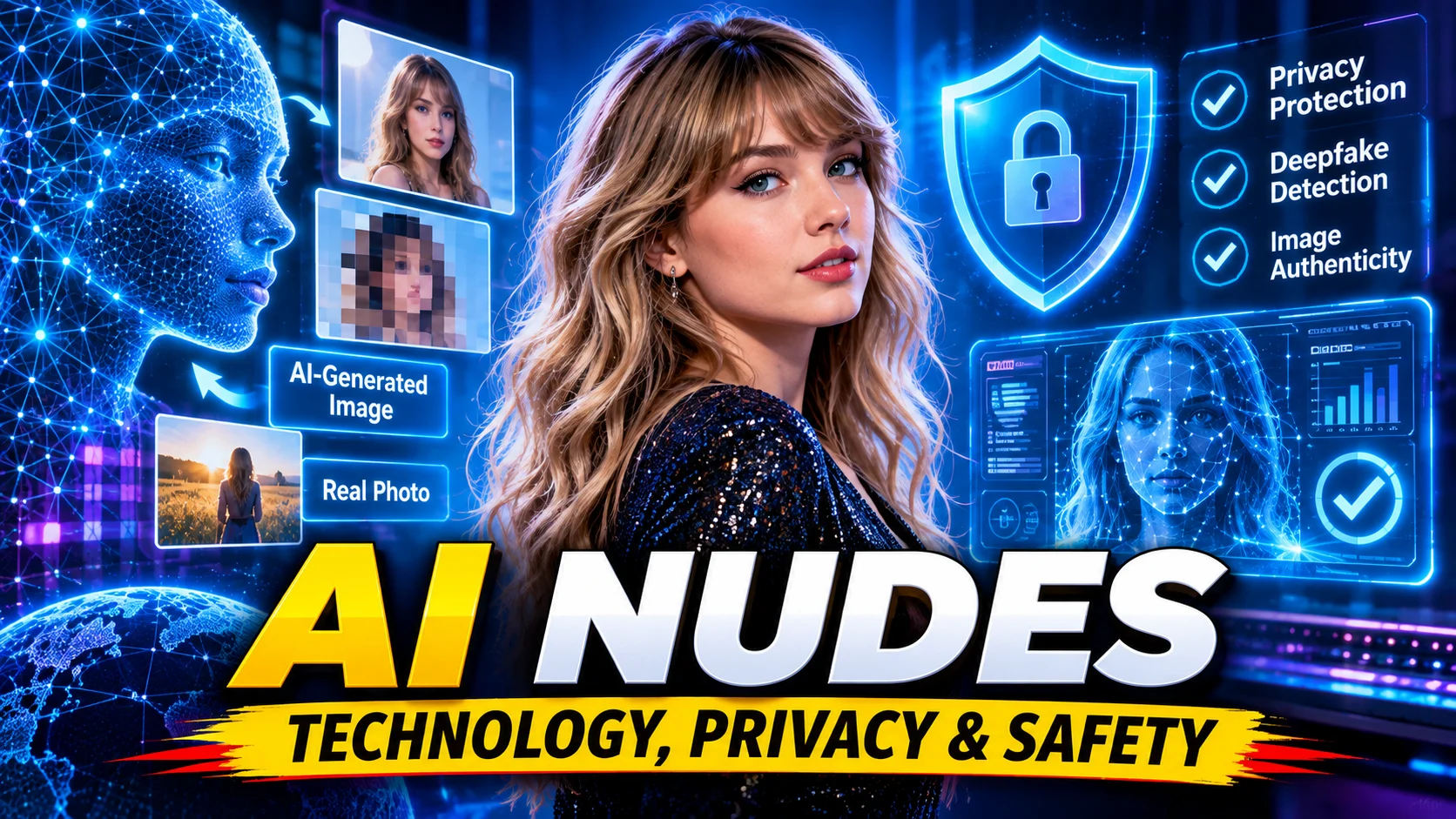
AI nudes are digitally generated or manipulated nude and sexually explicit images created using artificial intelligence, sometimes depicting fictional people and sometimes falsely portraying real individuals. Although generative AI makes realistic image manipulation easier, creating or sharing intimate images of someone without their consent can cause serious privacy, emotional, reputational, and legal harm.
At a Glance
- Meaning: AI nudes are synthetic or digitally altered intimate images produced with AI technology.
- Technology: Generative AI, diffusion models, image editing, and deepfake techniques can produce or modify images.
- Consent: Using someone’s likeness to create intimate imagery without permission raises serious ethical and legal concerns.
- Privacy: Uploaded photographs may expose personal information or be retained under a platform’s data policies.
- Legal risks: Laws differ by country, but several jurisdictions increasingly address non-consensual synthetic intimate imagery.
- Protection: Reporting mechanisms, image-hashing services, and search removal processes can help affected individuals.
What Are AI Nudes?
AI nudes are nude or sexually explicit images generated or modified using artificial intelligence. They may portray entirely fictional people or digitally alter photographs of existing individuals.
The technology belongs to the broader field of generative AI. These systems learn visual patterns from training data and use those patterns to create new images.
The term also covers AI-generated sexual deepfakes. These images falsely depict identifiable people in intimate situations they never participated in.
There is an important distinction between fictional adult imagery created with appropriate safeguards and non-consensual imagery involving real people. The second category raises significant concerns about privacy, consent, and personal safety.
AI-Generated Images Versus Sexual Deepfakes
These terms are related, but they do not mean exactly the same thing.
| Category | Meaning | Main concern |
|---|---|---|
| Fictional AI imagery | Synthetic images depicting invented adult characters | Platform rules and content restrictions |
| AI-edited photographs | Existing photographs modified using generative technology | Consent and image ownership |
| Sexual deepfakes | Synthetic intimate images falsely depicting real people | Privacy, harassment, and reputational harm |
| Non-consensual intimate imagery | Intimate imagery created or distributed without the depicted person’s permission | Exploitation and potential legal consequences |
An image does not need to be authentic to harm someone. A convincing fabricated image can damage a person’s relationships, professional reputation, and sense of security.
How Does AI Nude Image Technology Work?
AI image generation uses machine learning models to interpret visual information and produce new content.
Several technologies contribute to this process.
1. Generative AI Models
Generative AI models learn relationships between visual features, shapes, textures, lighting, and composition.
They use those learned patterns to create images based on textual or visual instructions.
The output is synthetic rather than a conventional photograph captured by a camera.
2. Diffusion Models
Diffusion models are widely used in modern image generation.
They learn to transform random noise into structured images through a sequence of computational steps.
During generation, the model gradually develops visual elements such as:
- Facial features
- Lighting and shadows
- Clothing and textures
- Background environments
- Human body proportions
The final result can resemble professional photography, although visual realism does not establish authenticity.
3. Image-to-Image Processing
Some generative systems can modify existing images instead of creating an entirely new scene.
Image-to-image processing uses an existing picture as a reference for producing an altered result.
This technology has legitimate applications in photography, design, restoration, and visual effects. However, using it to create intimate images of identifiable people without permission is harmful.
4. Deepfake Technology
Deepfake systems manipulate visual information to create convincing but fabricated representations of people.
Modern image-generation methods can combine facial characteristics, visual references, and synthetic environments.
These capabilities make it increasingly difficult for ordinary viewers to determine whether a particular image is authentic.
Why Are AI Nudes Receiving Attention?
Interest in AI-generated intimate imagery has grown alongside the wider adoption of generative AI.
Several developments explain the attention.
Increasing Accessibility of Generative AI
Image-generation technology has become more accessible through websites, applications, and AI-powered editing systems.
People no longer need advanced professional editing skills to experiment with sophisticated image-generation technology.
However, accessibility also increases the potential for misuse.
More Realistic Synthetic Images
Modern generative models can produce detailed visual compositions with convincing lighting, textures, and facial characteristics.
This creates additional challenges for individuals, online communities, and content moderation teams.
Growing Concerns About Digital Consent
A photograph shared publicly does not automatically grant permission for someone to transform it into intimate imagery.
This distinction has become central to discussions about AI ethics, digital identity, and online privacy.
Increased Media and Legal Attention
Governments, technology companies, and digital safety organizations are developing policies and procedures to address non-consensual intimate imagery.
The discussion now extends beyond image generation to include distribution, harassment, platform accountability, and victim support.
Benefits and Legitimate Uses of AI Image Generation
AI image generation has useful applications across several industries. However, these benefits should not be confused with permission to create intimate imagery involving real people.
Creative and Artistic Production
Generative AI can support visual experimentation, concept development, character design, and fictional storytelling.
Artists can explore different compositions without photographing every possible scene.
Digital Entertainment
Film, gaming, and entertainment companies use synthetic imagery and visual effects to develop fictional environments and characters.
Appropriate consent, licensing, and production safeguards remain important.
Fashion and Product Visualization
AI-assisted image generation can help creative teams explore visual concepts, clothing presentations, and product compositions.
These applications demonstrate how generative image technology can support legitimate commercial work.
Research and Education
Researchers can examine synthetic media, image authenticity, misinformation, and computer vision.
Educational projects can also explore how manipulated media affects digital trust.
The important principle is responsible use. Creative freedom does not remove another person’s rights.
Risks and Ethical Concerns of AI Nudes
The most serious concerns involve synthetic intimate images that portray real people without their knowledge or permission.
1. Non-Consensual Image Abuse
Someone may use an ordinary photograph to create a fabricated intimate image.
The depicted person might never have taken an intimate photograph or agreed to such a transformation.
Even when the image is entirely fictional, its distribution can create real harm.
2. Harassment and Cyberbullying
AI-generated intimate images can become tools for humiliation, intimidation, and online harassment.
Perpetrators may share fabricated images in social media groups, messaging applications, or public websites.
Victims may face unwanted attention and emotional distress.
3. Sextortion and Financial Scams
Criminals can use fabricated intimate imagery to threaten victims.
They may demand money, additional photographs, or other actions in exchange for not publishing the material.
The FBI has specifically warned about malicious actors manipulating ordinary photographs into explicit content for harassment and sextortion schemes.
4. Damage to Personal Reputation
A convincing fabricated image may spread before the affected person can respond.
Friends, colleagues, employers, and online communities may encounter the image without understanding that it is synthetic.
Removing the original publication may not immediately eliminate every copied version.
5. Privacy and Data Exposure
Some online image services require users to upload photographs.
Before uploading personal material to any AI platform, users should examine its privacy policy and data-handling practices.
Important questions include:
- Does the service retain uploaded images?
- Can submitted photographs be used for model training?
- How long does the platform store user content?
- Can users request permanent deletion?
- Does the service share information with third parties?
- Does it provide a clear reporting mechanism?
A platform’s marketing statement is not sufficient evidence of strong privacy protection.
Privacy and Security What Users Should Understand
Privacy is particularly important when dealing with intimate or personally identifiable images.
An AI platform may process uploaded photographs through external servers, third-party APIs, or cloud infrastructure.
This means users should not assume that uploaded content remains private simply because a service provides an automated result.
Check Data Retention Policies
Data retention describes how long a company keeps uploaded files and related information.
Some services may delete files after processing. Others may retain them for operational, moderation, or other disclosed purposes.
Read the actual policy rather than relying on assumptions.
Understand Model Training Practices
Some AI companies use submitted data to improve their products, subject to their stated policies and user settings.
Look for clear explanations of whether uploaded images can become training data.
Review Account and Access Security
Use strong passwords and multifactor authentication where available.
Avoid uploading photographs to unknown services or applications with unclear ownership and privacy practices.
Understand the Limits of Deletion
Deleting an account does not necessarily remove copies already downloaded, shared, or reposted elsewhere.
Ask platforms about deletion procedures and third-party data handling before submitting sensitive material.
How to Identify AI-Generated Intimate Images
Determining whether an image is AI-generated can be difficult.
Some synthetic images contain visual inconsistencies, but modern generation systems can produce highly convincing results.
Potential warning signs include:
- Unnatural reflections or lighting.
- Inconsistent background details.
- Unusual visual textures.
- Distorted objects or accessories.
- Inconsistent image metadata.
- Differences between the image and independently verified original photographs.
However, none of these signs proves that an image is synthetic.
Can AI Deepfake Detection Tools Identify Every Fake?
No detection system can guarantee perfect identification.
Detection software may examine image patterns, metadata, compression characteristics, or other signals.
However, editing, cropping, compression, and newer generation methods can reduce detection reliability.
Watermarks and provenance technologies may provide additional evidence about an image’s origin, but their absence does not establish authenticity.
For important situations, use multiple sources of evidence and avoid publicly accusing someone based on an automated detection result.
Legal Issues Surrounding AI Nudes
The legal treatment of AI-generated intimate imagery varies between countries and jurisdictions.
Relevant laws may address harassment, privacy violations, image-based sexual abuse, defamation, impersonation, or the distribution of non-consensual intimate content.
The fact that an image is artificial does not automatically make its creation or distribution lawful.
United States: TAKE IT DOWN Act
The United States enacted the TAKE IT DOWN Act on May 19, 2025.
The law addresses the intentional publication of non-consensual intimate visual depictions, including qualifying digitally created or altered images.
It also requires covered platforms to establish notice-and-removal procedures. The platform removal requirement includes removing covered content and known identical copies within 48 hours after receiving a valid request.
The Federal Trade Commission began enforcing the platform requirements in May 2026.
This is an important development for victims of synthetic intimate image abuse.
United Kingdom: Intimate Image Abuse Laws
The United Kingdom has strengthened its legal approach to synthetic intimate imagery.
The Crime and Policing Act 2026 introduces additional measures addressing intimate image abuse and tools designed to generate purported intimate images without consent.
The legislation also includes measures targeting the creation, supply, and offering of certain intimate-image generator tools.
The precise application depends on the circumstances and relevant statutory provisions.
What About Other Countries?
Other countries have different legal frameworks.
Users should check local legislation and seek qualified legal advice when intimate images are created or distributed without consent.
Never assume that something is legal simply because an application makes it technically possible.
What to Do If Someone Creates AI Nudes of You Without Consent
Discovering a fabricated intimate image can be upsetting. However, several practical steps can help protect your privacy and preserve evidence.
Step 1: Preserve Evidence
Record relevant information before requesting removal.
Where safe and lawful, preserve:
- The original webpage or post URL.
- Account usernames and profile links.
- Publication dates and timestamps.
- Relevant messages or threats.
- Screenshots of the surrounding context.
Avoid redistributing the intimate material.
If the content involves a minor, do not download, forward, or circulate it. Report it through appropriate child-protection channels.
Step 2: Report the Content
Use the reporting systems provided by the platform hosting the material.
Select the category relating to non-consensual intimate imagery, impersonation, harassment, or synthetic sexual content.
Google also provides a process for requesting removal of explicit personal imagery, including fabricated sexual images, from its search services.
Remember that removing a result from search does not automatically delete the original website publication.
Step 3: Use StopNCII.org for Adult Images
StopNCII.org helps adults protect intimate images from further circulation on participating platforms.
It creates a digital fingerprint, known as a hash, directly on the user’s device.
The original image does not leave the device during this hashing process. Participating platforms can use the fingerprint to identify matching content.
The service has limitations. It does not remove images from the entire internet, and edited or cropped versions may require separate hashes.
Importantly, StopNCII also supports qualifying synthetic intimate images depicting the person submitting the case.
Step 4: Use Take It Down for Images Created When You Were Under 18
Take It Down is a free service operated by the National Center for Missing & Exploited Children.
It helps people prevent the circulation of nude, partially nude, or sexually explicit images and videos taken when they were under 18.
Like StopNCII, it uses digital fingerprints rather than requiring the original image to be uploaded.
Do not download or obtain an image to submit it. Use only material already available on your device and follow the service’s instructions.
Step 5: Seek Appropriate Support
If someone threatens or blackmails you, avoid negotiating or sending additional material.
Preserve communications and consider contacting local law enforcement, a qualified legal professional, or a digital safety organization.
If the situation involves immediate threats or a minor, seek appropriate assistance promptly.
AI Image Platforms and Responsible Technology
Not every AI image platform provides the same safeguards.
A responsible evaluation should examine platform policies, consent protections, reporting mechanisms, and transparency.
Rather than treating intimate-image generators as ordinary creative products, users should understand the restrictions surrounding synthetic sexual content.
| Platform or organization | Primary relevance | Important consideration |
|---|---|---|
| Google Search | Reporting and removal of qualifying explicit personal imagery | Search removal does not erase the original publication |
| Meta | Policies against non-consensual intimate imagery | Users must report violating material |
| StopNCII.org | Hash-based protection for qualifying adult intimate images | Works with participating platforms |
| Take It Down | Hash-based protection for images taken when someone was under 18 | Designed for qualifying child and teen imagery |
| Hugging Face Hub | AI model discovery and research | Model availability does not establish permission for every use |
These organizations serve different purposes. They should not be treated as interchangeable image-generation services.
Common Myths About AI Nudes
Myth 1: AI-Generated Images Cannot Harm Anyone
False. A fabricated image can cause real emotional, professional, and reputational damage.
Myth 2: Public Photographs Can Be Used Without Restrictions
False. A publicly accessible photograph does not automatically authorize intimate manipulation or exploitation.
Myth 3: AI Detection Tools Always Identify Deepfakes
False. Detection methods have limitations, and sophisticated editing can make verification difficult.
Myth 4: Removing an Image From Google Deletes It Everywhere
False. Search removal and removal from the original hosting website are separate processes.
Myth 5: An AI-Generated Image Is Always Legal
False. Laws can address synthetic intimate images, including images falsely depicting real individuals.
Who Should Understand AI Nudes and Synthetic Media?
Understanding this technology matters to several groups.
General internet users: Recognizing synthetic media can improve digital awareness and help people respond to manipulated content.
Parents and educators: Understanding AI image manipulation helps adults discuss online consent, privacy, and exploitation with young people.
Content creators: Responsible image practices protect the rights and identities of people represented in digital content.
Businesses: Organizations should establish policies covering synthetic media, employee privacy, digital impersonation, and reporting procedures.
Technology professionals: Developers and platform operators should consider safeguards, moderation, abuse reporting, and privacy requirements when building generative AI systems.
The Future of AI-Generated Intimate Imagery
Generative AI will continue to influence digital photography, visual entertainment, and online communication.
At the same time, synthetic media creates challenges for identity verification and content moderation.
Several developments will shape this area.
Stronger Consent-Based Safeguards
AI providers face increasing pressure to prevent systems from facilitating non-consensual intimate imagery.
Better moderation, abuse reporting, and safeguards against identity manipulation will remain important.
Improved Image Provenance
Provenance systems can help document where an image originated and whether it has been modified.
Standards such as C2PA aim to provide information about digital content’s origin and editing history.
However, provenance information is not a universal solution. It may be missing, removed, or unavailable for older images.
Better Victim Support and Removal Processes
Hash-based matching, platform reporting, and legal removal procedures can help reduce the circulation of abusive imagery.
Organizations will need to improve cooperation as synthetic media becomes more sophisticated.
Greater Digital Literacy
People need to understand that realistic visual content is not necessarily authentic.
Education about consent, privacy, synthetic media, and online harassment will become increasingly valuable.
Frequently Asked Questions
1. What are AI nudes?
AI nudes are nude or sexually explicit images created or modified using artificial intelligence. They may depict fictional people or falsely portray real individuals in intimate situations.
2. Are AI-generated nude images real photographs?
No. AI-generated nude images are synthetic or digitally manipulated visuals rather than necessarily authentic photographs. Their realistic appearance does not prove that the depicted event occurred.
3. Is creating AI nudes of someone without consent illegal?
It depends on the country and circumstances. Some jurisdictions specifically address the creation or distribution of non-consensual synthetic intimate images, and other laws may also apply.
4. How can someone remove AI-generated nude images from the internet?
Start by preserving evidence and reporting the content to the hosting platform. Adults may use StopNCII.org for qualifying images, while Take It Down supports qualifying images taken when the person was under 18.
5. Can AI-generated intimate images be detected?
Some detection systems analyze visual inconsistencies, metadata, and other signals. However, no detection method guarantees accurate identification of every synthetic image.
Conclusion
AI nudes demonstrate both the capabilities and the risks of modern generative artificial intelligence. The technology can produce realistic synthetic imagery, but its use becomes particularly harmful when it violates another person’s privacy or consent.
The most important considerations are responsible development, informed consent, transparent platform policies, and effective victim protection.
Anyone evaluating AI image technology should examine its data practices, content restrictions, and reporting procedures. People affected by non-consensual intimate imagery should preserve evidence and use appropriate removal and support services.
As generative AI advances, protecting digital identity and personal privacy must remain central to responsible technology development.

Alex Smith is an AI-focused tech writer at Aixorbit.com, sharing simple and actionable insights on artificial intelligence, automation and digital growth.