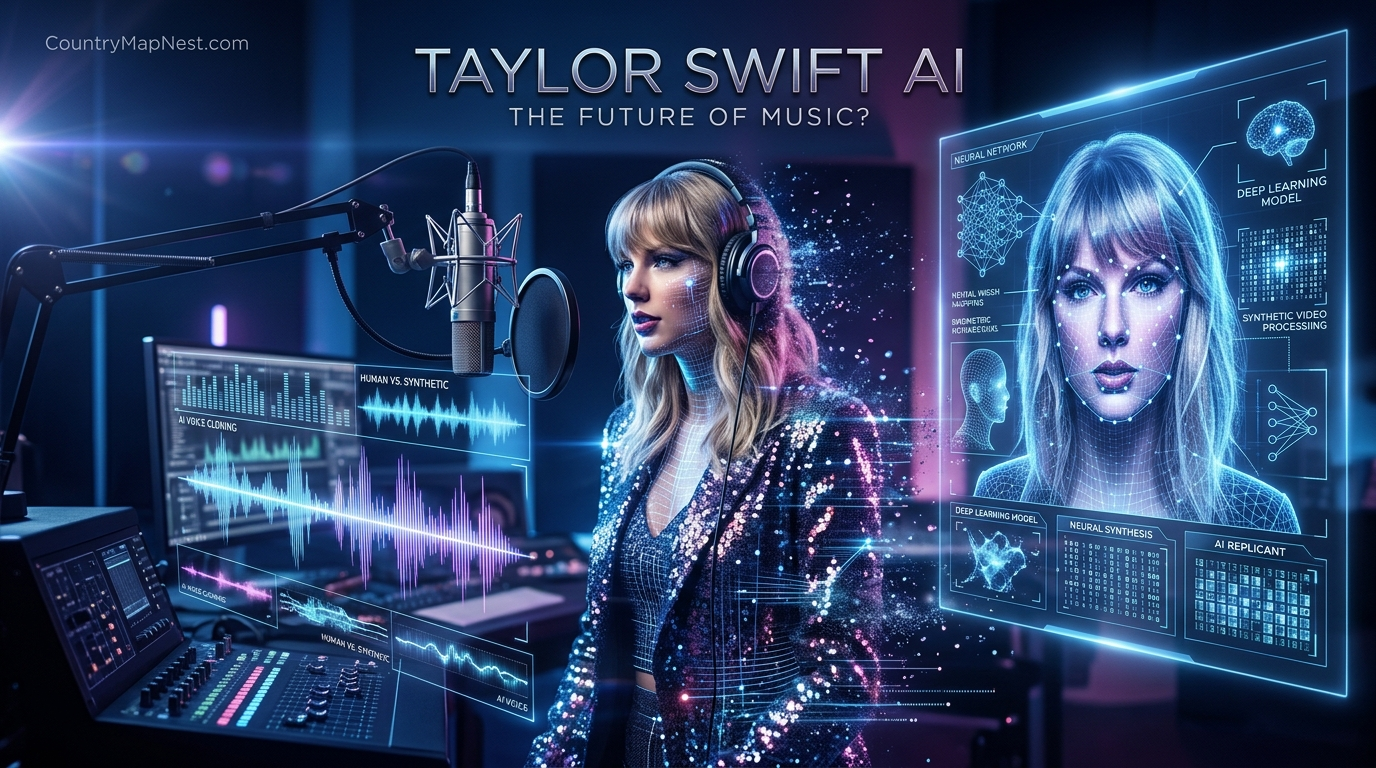
Artificial intelligence is changing how people create images, music, and videos featuring celebrities. Taylor Swift AI has become a widely discussed topic because generative AI can imitate her appearance and recognizable voice without traditional production methods. Her 2026 trademark applications have also brought attention to the growing debate about celebrity identity, consent and digital rights.
Taylor Swift AI refers to artificial intelligence-generated images, videos, music and voice imitations associated with the global pop star. These technologies create opportunities for creative expression but also raise serious concerns about unauthorized impersonation, misinformation, privacy and intellectual property.
Taylor Swift AI at a Glance
- AI images: Generative tools can create fictional pictures resembling Taylor Swift.
- AI voice cloning: Synthetic audio can imitate recognizable vocal characteristics.
- AI music: Users can produce unofficial vocal covers and experimental songs.
- Deepfake videos: Face-swapping and video-generation systems can create convincing but misleading scenes.
- Legal protection: Swift’s 2026 trademark applications highlight efforts to protect specific voice recordings and visual branding.
- Main concern: Consent, authenticity, misleading endorsements, and non-consensual synthetic content.
What Is Taylor Swift AI?
Taylor Swift AI describes the use of artificial intelligence to generate or manipulate digital content associated with Taylor Swift.
It is not one official application, software product, or AI model. Instead, the phrase covers several technologies and online activities.
These include AI-generated portraits, synthetic singing voices, fan-made music experiments, manipulated videos, and fictional digital representations.
Some creations are clearly labeled fan projects. Others attempt to make viewers believe that Taylor Swift actually said, performed, or endorsed something.
That distinction matters.
A clearly labeled fictional image is different from a deceptive advertisement or an intimate image created without consent.
How AI Creates Taylor Swift Images
AI image generators use machine learning models to interpret written instructions and produce visual content.
A user might describe a fictional concert scene, a particular fashion style, or an imaginary editorial photoshoot. The model then generates an image based on its learned visual patterns.
Depending on the platform’s policies and safeguards, prompts involving recognizable public figures may be restricted.
Common AI image techniques include:
- Text-to-image generation: Produces pictures from written descriptions.
- Image-to-image generation: Changes an existing image according to new instructions.
- Face replacement: Places one person’s facial appearance into another image.
- Image enhancement: Adjusts lighting, resolution, texture, and other visual details.
These techniques can produce realistic results, but visual quality does not establish authenticity.
How Taylor Swift AI Voice Cloning Works
AI voice cloning uses audio samples to model recognizable characteristics of a person’s voice.
Depending on the system, these characteristics can include pronunciation, rhythm, pitch, and vocal tone.
A synthetic voice model may then generate new spoken words or singing performances.
AI-generated Taylor Swift covers have attracted attention because they can make unfamiliar songs sound as though Swift performed them.
However, an AI-generated vocal performance is not evidence that the artist recorded or approved the song.
The original recording, the underlying composition, the performer’s identity, and the generated audio may involve different legal rights.
Why Is Taylor Swift AI Trending?
Taylor Swift is one of the most recognizable performers in popular culture. Her music, public appearances, fashion, and distinctive personal brand make her a frequent subject of online discussion.
AI has made it easier to manipulate recognizable faces and voices. As a result, content featuring famous individuals can spread quickly across social platforms.
Several developments explain the growing interest.
1. AI-Generated Celebrity Images
Generative image technology allows users to create fictional celebrity-inspired scenes in minutes.
Some images are harmless creative experiments. Others misrepresent celebrities or create inappropriate content.
Taylor Swift has previously been targeted by sexually explicit AI-generated imagery. The controversy demonstrated how easily synthetic content can violate someone’s dignity and privacy.
2. AI Voice Covers and Synthetic Music
AI voice technology has introduced a new category of unofficial music content.
Creators can experiment with synthetic vocals, alternative arrangements, and imagined performances.
These projects may attract music fans, but they can also create confusion about whether a recording is genuine.
Listeners should check the original artist’s verified accounts and official music channels before treating an AI cover as a real release.
3. Deepfake Videos and False Endorsements
Deepfake technology can manipulate faces, voices, and video footage.
A fabricated clip might show a celebrity promoting a product, supporting a political candidate, or making a statement that never happened.
Such content can damage public trust and create financial risks for unsuspecting viewers.
Celebrity recognition makes these fabrications particularly persuasive.
Taylor Swift’s 2026 Trademark Applications and AI Protection
One of the most important developments in the Taylor Swift AI discussion occurred in April 2026.
According to Reuters reporting published on April 27, Taylor Swift’s company, TAS Rights Management, filed three trademark applications with the United States Patent and Trademark Office.
The applications covered two audio recordings and one visual image.
The audio samples included the spoken phrases:
- “Hey, it’s Taylor.”
- “Hey, it’s Taylor Swift.”
The visual application featured Swift performing onstage in a distinctive outfit while holding a pink guitar.
The filings were interpreted as an effort to strengthen protection against unauthorized AI imitations of her voice and likeness.
The development is significant because AI can generate new audio that resembles a performer without necessarily reproducing an existing commercial recording.
Traditional copyright protection may not address every situation involving synthetic imitation. Trademark and publicity-related claims can provide additional legal arguments in certain circumstances.
However, an important distinction remains: filing a trademark application is not the same as receiving an approved registration.
Swift’s filings also do not mean that she has automatically trademarked every possible version of her voice, face, or personality.
A September 2026 legal analysis by Dorsey explains that trademark protection generally concerns specific source-identifying features and commercial uses. It does not automatically prohibit every fictional AI creation that resembles a celebrity.
Main Types of Taylor Swift AI Content
Different AI technologies produce different types of celebrity-related content.
| AI Content Type | How It Works | Main Concern |
|---|---|---|
| AI portraits | Generates fictional celebrity-inspired pictures | Consent and misleading presentation |
| AI voice covers | Creates synthetic singing performances | Voice imitation and music rights |
| Deepfake videos | Manipulates faces and video footage | Deception and impersonation |
| AI animations | Converts images into moving scenes | Unauthorized likeness use |
| Synthetic advertisements | Creates fabricated celebrity promotions | False endorsement and scams |
| AI fan art | Produces fictional creative artwork | Attribution and appropriate use |
AI-Generated Taylor Swift Pictures
AI portraits are among the easiest synthetic celebrity creations to share online.
They may depict fictional outfits, imaginary concerts, fantasy environments, or editorial-style photography.
The main issue is how the content is presented.
A fictional image clearly labeled as AI-generated is less likely to mislead viewers than an image presented as genuine news or an authentic photograph.
AI-Generated Taylor Swift Songs
AI music tools can generate vocal performances that imitate recognizable singing characteristics.
Some creators use this technology for experiments or entertainment. Others publish misleading recordings that appear to be official releases.
There are several separate considerations:
- Whether copyrighted recordings were used.
- Whether the composition or lyrics are protected.
- Whether the generated voice improperly imitates the artist.
- Whether the content falsely suggests approval or participation.
- Whether the platform permits the material.
An AI cover should never be treated as an official Taylor Swift song without reliable confirmation.
Taylor Swift Deepfake Videos
Deepfake videos combine image manipulation, face replacement, voice synthesis, or generative video technology.
They can produce convincing scenes that never happened.
The risks become especially serious when a video depicts someone in a sexualized situation, makes false statements, or appears to show an endorsement.
Non-consensual intimate imagery is not simply another form of fan entertainment. It can cause significant personal and reputational harm.
Benefits and Creative Possibilities of AI Celebrity Technology
AI-generated celebrity content is not automatically harmful.
Responsible applications can support creative experimentation, media education, and discussions about digital technology.
Potential legitimate uses include:
- Media literacy: Teaching audiences how synthetic media works.
- Film research: Exploring digital characters and visual effects.
- Creative experimentation: Producing fictional scenes with appropriate permissions.
- Music technology education: Demonstrating synthetic audio and vocal processing.
- Digital storytelling: Exploring how AI changes modern entertainment.
The most important requirement is responsible use.
Creators should avoid implying that Taylor Swift participated in, approved, or endorsed an AI project without authorization.
Risks and Ethical Problems of Taylor Swift AI
The same tools that make AI content accessible can also enable abuse.
1. Non-Consensual Images
AI can produce fabricated images that depict real individuals in situations they never experienced.
Sexualized deepfakes are particularly harmful because they use someone’s identity without permission.
The person depicted may face harassment, humiliation, reputational damage, and emotional distress.
2. Voice Impersonation
A cloned voice can make fabricated statements sound authentic.
Scammers could use synthetic celebrity audio to promote fake products, fraudulent investment opportunities, or suspicious giveaways.
A familiar voice should never be considered proof of identity.
3. Fake Celebrity Endorsements
Fraudsters may use celebrity images and voices to make advertisements appear legitimate.
A fabricated Taylor Swift endorsement could encourage viewers to purchase a product or share personal information.
Always verify promotional claims through official sources.
4. Copyright and Intellectual Property Disputes
AI-generated content may involve several types of intellectual property.
These can include:
- Copyright in original music and sound recordings.
- Rights associated with performances.
- Trademarks and commercial branding.
- Publicity or personality rights, depending on jurisdiction.
- Platform-specific licensing and content policies.
The legal treatment of AI-generated content is still developing. Not every imitation automatically violates copyright, and not every AI creation is legally permitted.
5. Misinformation
Realistic synthetic media can make fictional events appear genuine.
A fabricated interview, political statement, or concert announcement may spread before viewers discover the truth.
This creates problems for fans, journalists, businesses, and social media platforms.
Is Taylor Swift AI Legal?
There is no single worldwide answer.
The legality of AI-generated celebrity content depends on its purpose, the material used, the location, and the applicable laws.
For example, a fictional image made for private experimentation may raise different legal questions from an unauthorized commercial advertisement or non-consensual intimate deepfake.
Copyright and Voice Rights
Copyright generally protects original creative works, such as musical compositions and sound recordings.
However, a newly generated voice that resembles an artist does not necessarily reproduce a protected recording.
That distinction helps explain why celebrity voice imitation raises questions beyond traditional copyright law.
Publicity rights, false endorsement, privacy protections, and trademark law may also become relevant.
The United States and Deepfake Regulation
The United States introduced an important federal measure in 2025.
The TAKE IT DOWN Act was signed into law on May 19, 2025. It addresses the intentional publication of non-consensual intimate visual depictions, including certain digitally created or manipulated depictions.
It also establishes removal requirements for covered platforms.
This law is relevant to the wider discussion of AI-generated intimate imagery. It should not be interpreted as a general ban on all AI celebrity content.
United Kingdom and Digital Replicas
The UK government’s March 2026 report on copyright and artificial intelligence examined the growing problem of digital replicas.
It recognized that AI can reproduce a person’s face or voice and that unauthorized replication can cause harm.
The report also discussed possible improvements to protections for people’s digital identities.
These developments show that governments are still examining how existing legal frameworks should respond to generative AI.
Anyone publishing celebrity-related AI content should check the laws that apply in their own jurisdiction.
How to Identify Fake Taylor Swift AI Content
AI-generated images and audio can look or sound convincing. However, several checks can help you avoid misinformation.
Check the Original Source
Look for the content on verified social media accounts, official websites, or recognized music distribution channels.
If a supposed announcement appears only on an unfamiliar account, treat it cautiously.
Examine the Context
Ask whether the video or image has an identifiable original source.
Look for missing context, suspicious captions, unusual claims, and misleading promotional links.
Listen for Audio Inconsistencies
Synthetic audio may contain unnatural pronunciation, inconsistent emotional expression, or unusual transitions.
These clues are not conclusive, but they can justify further verification.
Use Reverse Image Search
A reverse image search can help identify earlier versions of a picture.
It may also reveal whether a supposedly recent photograph appeared online in a different context.
Look for Independent Confirmation
Important announcements should have reliable supporting evidence.
Check reputable reporting rather than relying on viral posts, anonymous accounts, or screenshots.
Responsible AI Tools and Platforms
There is no single official Taylor Swift AI generator.
Different platforms offer different generative capabilities, moderation systems, and commercial policies.
| Platform | General Purpose | Important Consideration |
|---|---|---|
| Adobe Firefly | AI-assisted image creation and editing | Review its current policies and permitted content |
| OpenAI image tools | Image generation and editing | Follow identity, safety, and likeness restrictions |
| Google Gemini | AI assistance and image-related capabilities | Check current image-generation policies |
| Hugging Face Hub | Hosts AI models and development resources | Model licenses and safeguards vary |
| Suno | AI music generation | Review music rights, licensing, and voice-related restrictions |
These platforms are not official Taylor Swift products or authorized Taylor Swift voice generators.
Their features, access conditions, and terms can change. Users should check current platform documentation before creating or distributing content involving real people.
What Is the Future of Taylor Swift AI?
The relationship between celebrities and generative AI will likely become more complicated as image, audio, and video models improve.
Three developments deserve particular attention.
Stronger Digital Identity Protection
Celebrities may increasingly use trademarks, licensing agreements, and legal action to protect distinctive aspects of their public identities.
Swift’s 2026 filings demonstrate one approach, although their ultimate legal reach depends on examination, registration, and how courts interpret the relevant rights.
Better Synthetic Media Detection
Technology companies and researchers are developing methods to identify manipulated content.
These approaches include provenance information, content credentials, watermarking, and forensic analysis.
However, no single detection method can reliably identify every AI-generated image or recording.
Clearer Consent and Licensing Standards
Entertainment companies, artists, technology providers, and lawmakers will continue debating how digital replicas should be licensed.
Clear permission, attribution, and disclosure standards could help distinguish legitimate creative projects from harmful impersonation.
Frequently Asked Questions About Taylor Swift AI
1. What is Taylor Swift AI?
Taylor Swift AI refers to AI-generated pictures, synthetic voice recordings, music covers, and videos associated with Taylor Swift. These creations can be fictional, experimental, or misleading, depending on their content and presentation.
2. Can AI copy Taylor Swift’s voice?
AI voice-cloning systems can imitate recognizable vocal characteristics using audio samples. However, an AI-generated recording is not an authentic Taylor Swift performance or proof of her approval.
3. Did Taylor Swift trademark her voice in 2026?
In April 2026, TAS Rights Management filed three US trademark applications covering two audio recordings and one visual image associated with Taylor Swift. These were applications for specific material, not automatic trademark ownership of every possible imitation of her voice or appearance.
4. Are Taylor Swift AI images legal?
It depends on the image, how it was created, how it is used, and the laws that apply. Non-consensual intimate imagery, misleading commercial uses, and copyright infringement can raise serious legal concerns.
5. How can I identify a fake Taylor Swift AI video?
Check the original source, look for confirmation from verified accounts, examine suspicious visual or audio details, and compare the content with reliable reporting. Do not assume that realistic-looking footage is authentic.
Conclusion
Taylor Swift AI illustrates both the creative potential and the risks of modern generative technology. AI can produce convincing images, synthetic vocals, and fictional videos, but these capabilities also raise important questions about consent, identity, and ownership.
Swift’s 2026 trademark applications represent an important development in the effort to protect recognizable aspects of a celebrity’s identity. However, trademark filings alone cannot solve every problem involving digital impersonation.
For fans and creators, the most important principles are simple: verify authenticity, respect consent, disclose synthetic content, and follow applicable intellectual property laws.
As AI technology advances, responsible creation and stronger digital identity protections will become increasingly important.

Oliver Wilson is an AI researcher and tech writer living at the intersection of human creativity and machine intelligence. At AixOrbit.com, he decodes complex neural networks, generative AI and emerging tech trends into actionable insights making sure humans stay one step ahead of the algorithms.